Summary: Located along the popular Spit to Manly bushwalk, the Grotto Point Aboriginal Site included boomerangs, fish, sharks and a large kangaroo. The engravings are about 1,000 years old and have interpretative signage.

The Grotto Point Aboriginal Site at Dobroyd Head in Mosman is a signposted Aboriginal heritage site, located along the popular Spit to Manly bushwalk. Timber enclosures protect the engravings, and there is detailed interpretative signage. The site features two enormous kangaroos: one is the biggest recorded among the engravings around Sydney (22 feet in length), while the second one overlaps a whale.
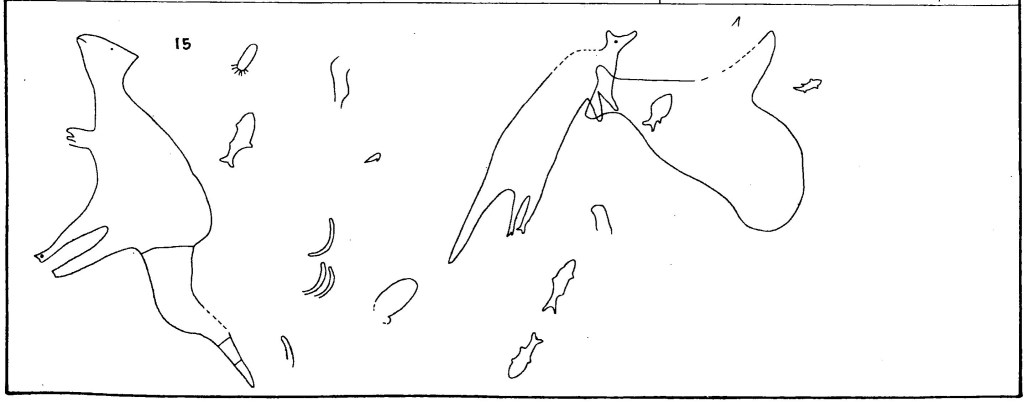
Engraving Grotto Point Grotto Point Aboriginal Site

The site also has a number of boomerangs, two sharks and some fish.

mg 9668 lr Grotto Point Aboriginal Site

The large kangaroo was considered to be a figure of great power and strength, and of “prime ritual and mythological importance together with the other one”.

Subscribe via Email

Enter your email address to subscribe to Hiking the World, and receive notifications of new posts by email. (A hike is added every 1-2 weeks, on average.)

Join 745 other subscribers

0 Comments

Leave a Reply

Aboriginal Sites by National Park

Red Hands Cave, Glenbrook (Blue Mountains)
The Blue Mountains National Park (and surrounding areas along the Great Western Highway) is thought to have over a thousand indigenous heritage sites, although much of the park has not been comprehensively surveyed. The Aboriginal rock sites in the Blue Mountains include grinding grooves, stensils, drawing and rock carvings.
Located to the north-west of Sydney, just south of the Dharug and Yengo National Parks, Maroota has a high concentration of (known) Aboriginal sites. Many more Aboriginal heritage sites are located in the Marramarra National Park. The original inhabitants of the area were the Darug people.
Hornsby Shire - which is the largest LGA in the Greater Sydney Metropolitan region - contains approximately 600 recorded Aboriginal rock art sites (and over 1,200 Aboriginal heritage sites). These date back from thousands of years to post-European contact art.